The Mechanics of Multitasking: Two Cars, One Mind
The core innovation of Dodge Driver is the Simultaneous Dual-Car Control. Most endless runners focus on a single avatar navigating a 3D or 2D space. Dodge Driver doubles the stakes. You are responsible for two separate vehicles, each occupying its own half of the screen, hurtling toward a horizon filled with randomized barricades.
The Swipe Precision Engine
Control is handled through intuitive swipe mechanics. A single swipe can shift the lane of a car, but the true challenge arises when the brain must process two different obstacle patterns at once. It creates a psychological phenomenon known as "cognitive load," where the player must decide in a fraction of a second which car is in immediate danger.
The Symmetrical Trap: Early in a run, obstacles might appear in the same lanes for both cars, lulling you into a rhythm.
The Asymmetrical Shift: As the techno beat intensifies, the patterns diverge. Car A might need to swerve left while Car B must hold its ground or swerve right. This is where the "panic" sets in, and where only the elite players survive.
Zero-Tolerance Collision Physics
In Dodge Driver, there are no health bars. There are no shields. There are no "near-miss" bonuses that save you from a collision. If a pixel of your neon bumper touches a barricade, the run is over. This unforgiving design ensures that every high score is a legitimate badge of honor. When you hit that 30-second mark—a feat most players struggle to achieve—you know it wasn't luck; it was pure skill.
Aesthetic Direction: Neon, Pixels, and Techno
At GameWise, we believe that the atmosphere of a game should reinforce its gameplay. For Dodge Driver, the aesthetic choice was clear: Retro-Futurism.
Vibrant Pixel Art
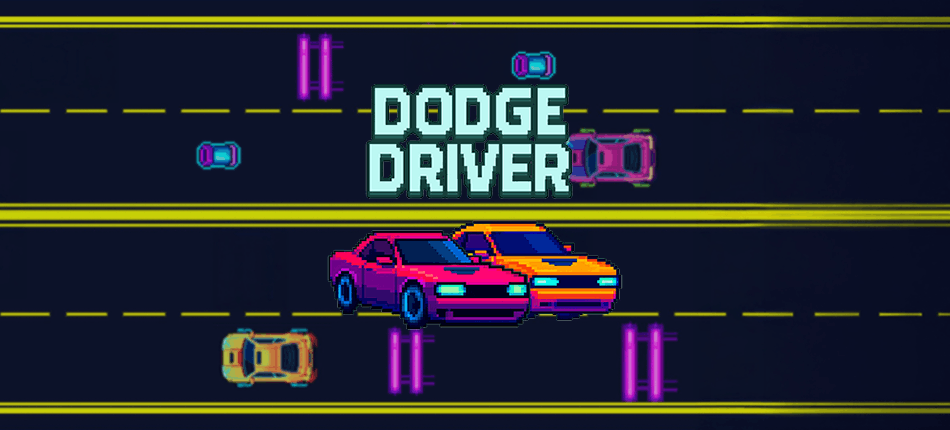
The visual style utilizes "chunky" pixels that glow with a neon intensity. This isn't just for nostalgia; it’s for clarity. In a game where a millisecond determines a win or a loss, the player needs to be able to distinguish obstacles from the background instantly. The high-contrast color palette—electric blues, hot pinks, and acid greens—ensures that the "lanes of death" are always clearly defined, even as the speed ramps up to dizzying levels.
The Relentless Soundtrack
Audio is a crucial component of the Dodge Driver experience. We’ve paired the gameplay with a relentless, driving techno soundtrack that syncs with the speed of the cars. The music acts as a metronome for your reflexes. As the tempo increases, your heart rate follows, creating a physical connection between the player and the digital world. The "punchy" sound effects of a successful lane switch provide tactile feedback, making every move feel substantial.
The Infinite Gauntlet: Randomization and Fairness
One of the biggest hurdles in arcade design is predictability. If a player memorizes a level, the challenge disappears. Dodge Driver solves this through Infinite Randomization.
Procedural Obstacle Generation
Every time you hit the "Retry" button, the game constructs a brand-new gauntlet. The barricades are placed using a sophisticated algorithm that ensures the game is always difficult but never impossible. There is always a "golden path" through the chaos; the only question is whether your eyes are fast enough to find it.
The "One More Try" Philosophy
Because the runs are short and the restarts are instantaneous, Dodge Driver taps into the addictive nature of the "perfect run." You know exactly why you crashed—you swiped left when you should have swiped right. There are no "unfair" deaths caused by glitchy physics or pay-to-win mechanics. This "Classic Arcade Fairness" is what keeps players coming back at 2:00 AM, determined to beat their personal best by just one more second.
Strategy for Survival: Handling the Heat
While Dodge Driver is a game of reflexes, there is a layer of strategy that separates the legends from the washouts. To survive the neon lanes, players must move beyond reactive swiping and into Predictive Navigation.
Peripheral Vision Training: The best players don't look directly at the cars. They focus on the center of the screen, using their peripheral vision to monitor both lanes simultaneously.
The "Micro-Swipe": Learning the minimum distance required for a swipe allows for faster recovery. In the late-game stages, where obstacles are spaced mere pixels apart, every millimeter of thumb movement counts.
Pattern Recognition: While the obstacles are randomized, the "types" of traps repeat. Recognizing a "zigzag" or a "pincer" trap early allows the brain to pre-program the necessary swipes before the car even reaches the danger zone.
Why Dodge Driver is the Ultimate Reflex Test
In an industry filled with "bloat"—unnecessary menus, daily login rewards, and complex upgrade trees—Dodge Driver stands as a monument to Pure Gameplay. It is a "no-frills" experience designed for the purist.
Bite-Sized Intensity
Dodge Driver is the perfect companion for the modern lifestyle. Whether you have thirty seconds while waiting for coffee or twenty minutes on a commute, the game provides an immediate hit of intensity. It is "Temple Run on steroids," stripped of the fluff and dialed up to eleven.
Bragging Rights and Global Competition
The simplicity of the scoring system makes Dodge Driver the ultimate tool for competition. Surpassing a friend’s score by a single second feels like a monumental victory. GameWise has integrated global leaderboards to fuel this fire, allowing you to see exactly where your reflexes rank against the fastest drivers in the world.
Conclusion: Prove Your Worth
Dodge Driver: Save the Cars is a celebration of the frantic, the fast, and the focused. It is a game that honors the player’s skill above all else. At GameWise, we don't just want you to play our games; we want you to conquer them.
The lanes are open. The techno is pumping. The barricades are waiting. You have two cars, one brain, and zero room for error. Can you handle the heat, or will you just be another pixelated wreck on the side of the road?
Swipe sharp. Stay focused. Survive the neon.