The Anatomy of the Strike: Mechanics and Mastery
The core of the experience lies in the Tongue Flick Mastery system. We spent months tuning the physics of the tongue to ensure it felt "snappy" yet weighty. When you tap the screen, the response is instantaneous, but the trajectory is fixed. This creates a fascinating skill ceiling: you aren't just tapping on a bug; you are tapping where the bug will be.
The Rhythm of the Hunt
As you progress, the insects don't simply fly in straight lines. We’ve implemented Dynamic Insect Patterns—bees that zig-zag, beetles that dash in sudden bursts, and dragonflies that hover tantalizingly out of reach before darting away. Success requires "rhythm timing," where you begin to anticipate the pulse of the arena.
The Hunger and the Venom
Survival in the wild is a balancing act. In Chameleon the Hunter, you are fighting a two-front war:
The Hunger Meter: This is your primary timer. Every second that passes, your energy depletes. Every missed strike accelerates your hunger. To survive, you must chain "perfect catches" to keep your meter in the green.
The Venom Threat: Not every bug is a snack. Vividly colored poisonous insects act as "anti-targets." Snagging one doesn't just end your combo—it triggers a venom timer that clouds your vision and slows your tongue speed.
Jugnoo: The Firefly Lifeline
Even the most skilled predators make mistakes, and that’s where Jugnoo comes in. Jugnoo is a glowing firefly companion that serves as your mechanical "second wind."
When the venom timer reaches its limit or hunger nearly bottoms out, Jugnoo can be deployed for a critical revival. This mechanic was designed to prevent player frustration during high-score runs. However, Jugnoo isn't a "get out of jail free" card; his help is earned through consistent play and strategic collection of "Light Shards." This adds a layer of resource management to the high-speed action—do you use Jugnoo now to save a mediocre run, or save him for a potential world-record climb?
The Four Biomes: From Comfort to Chaos
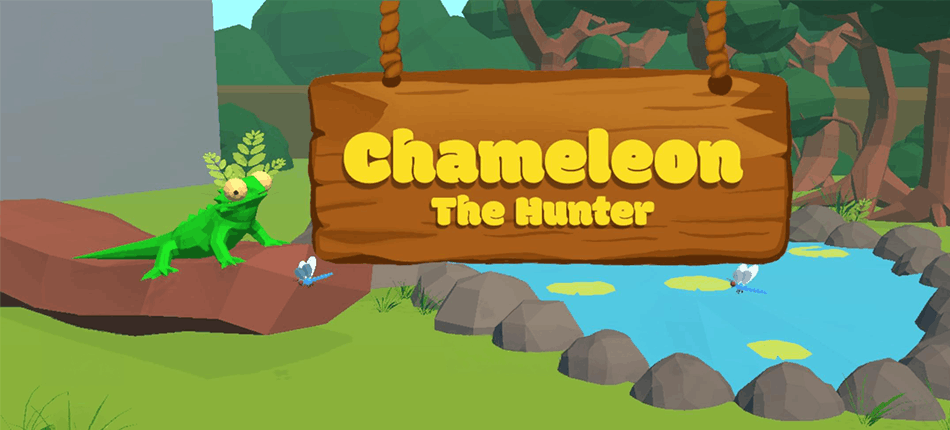
A predator is only as good as its environment. Chameleon the Hunter features four distinct arenas, each designed to test a specific subset of your reflexes.
1. Home (The Indoor Wilds)
This is our "tutorial" zone, but don't let the cozy living room aesthetic fool you. While the bugs here move at a predictable pace, the arena is cluttered with household objects that can obstruct your view. It’s the perfect place to master the basic physics of the tongue flick and learn the timing of the standard fly.
2. Mountain Lake (Riverside Reflexes)
The introduction of water changes everything. In the Mountain Lake biome, players must contend with reflections and the distracting movement of the river. The insects here are faster, often skimming the surface of the water, requiring "low-angle" snaps that leave little room for error.
3. Jungle (Forest Valley Ambushes)
This is where the difficulty spikes. The Jungle is a dense, multi-layered environment. Insects often hide behind foliage, appearing for only a split second. This biome emphasizes Pattern Recognition. You’ll need to learn which leaves rustle before a beetle emerges, turning the game into a high-speed "Whac-A-Mole" experience.
4. Desert (The Dusty Storm)
The ultimate test of endurance. In the Desert, periodic dust storms roll across the screen, obscuring the playing field and forcing you to rely on sound cues and the faint silhouettes of your prey. It is a grueling test of focus where survival is measured in seconds, not minutes.
Progressive Evolution: Skins and Variants
We believe that skill should be rewarded with style. Each biome offers a path to unlock unique Chameleon Skins. These aren't just cosmetic changes; they represent your mastery over a specific environment.
The Neon Stalker skin, earned in the Jungle, features bioluminescent stripes.
The Sand-Wraith variant helps you track movement more easily during Desert storms.
This progression system provides a long-term goal for players. It’s one thing to survive the Jungle; it’s another to do it while sporting the legendary Apex Predator skin, a badge of honor that tells the community you’ve conquered every hazard the game has to throw at you.
Why It Hooks: The GameWise Design Philosophy
At GameWise, we build games for the "In-Between Moments." Whether you’re on a commute, in a waiting room, or cooling down after a long day, Chameleon the Hunter provides instant engagement.
The "One-More-Try" Loop
By keeping the restart times near-instant and the runs relatively short (typically 1–3 minutes), we’ve created a gameplay loop that respects the player’s time while fueling their competitive spirit. There are no mid-run ads to break your "flow state." It is just you, the chameleon, and the buzzing fly.
Offline Accessibility
We recognize that the best mobile games are the ones you can play anywhere. Chameleon the Hunter is fully playable offline, ensuring that your high-score chase isn't interrupted by a poor signal. Your data syncs the moment you’re back online, keeping the global leaderboards up to date.
Final Thoughts: Join the Hunt
Chameleon the Hunter is a love letter to the classic arcade era, reimagined for the modern mobile gamer. It’s a game that starts with a simple tap and ends with a pounding heart. It challenges you to stop being a spectator and start being the predator.
The insects are buzzing. The hunger is rising. The arena is set. Do you have the reflexes to become a chameleon legend?
Download Chameleon the Hunter today and prove your place at the top of the food chain.